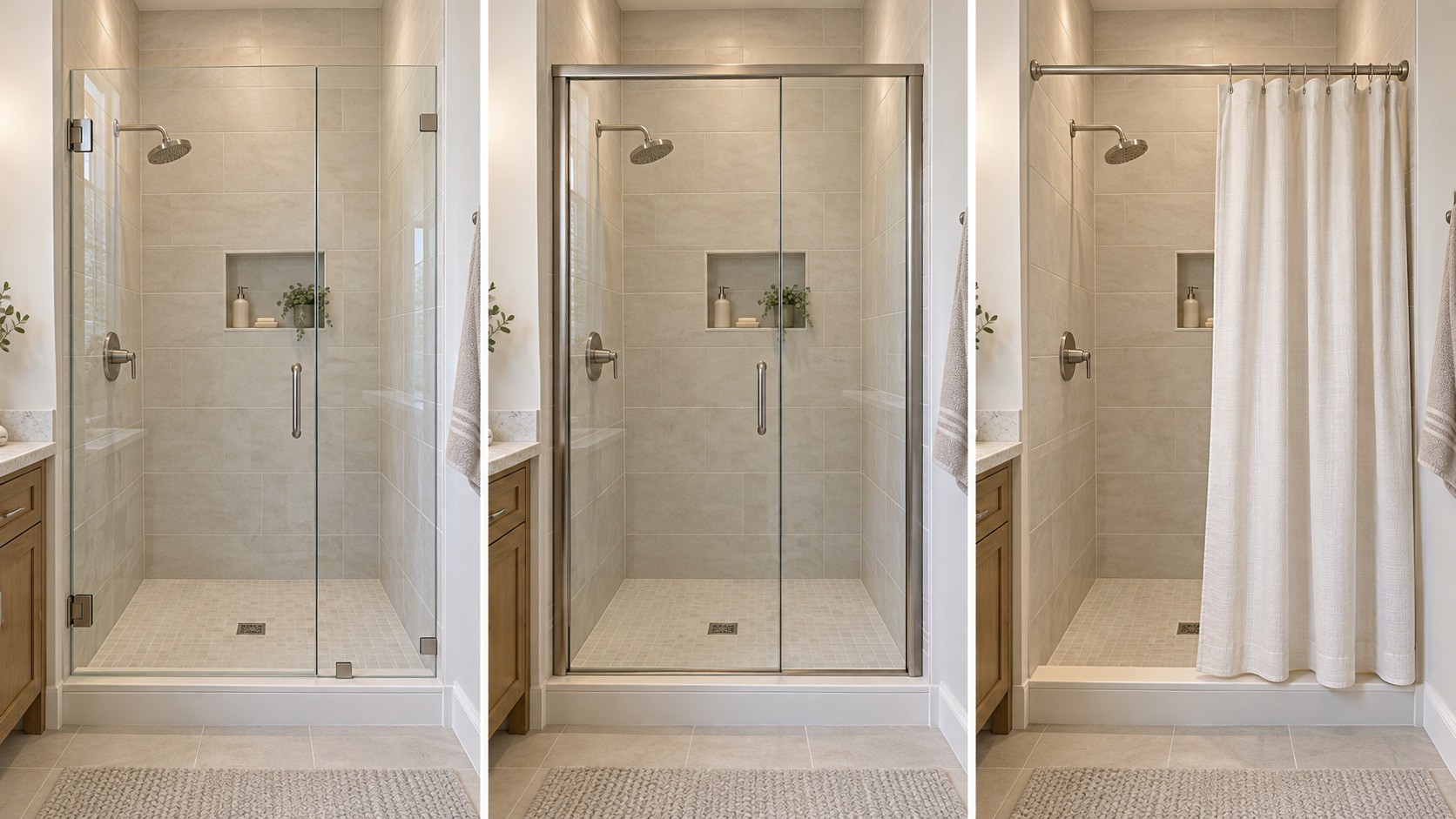

The shower enclosure is one of the most visible decisions in a bathroom remodel. It affects how the room looks, how easy the space is to clean, and how well water stays where it belongs. For many Georgia homeowners, the choice comes down to three options: frameless glass, semi-frameless glass, or a shower curtain.
Each option has real strengths. None of them is the right answer for every bathroom. Your budget, the layout of the shower, the people who use it, and how much cleaning you are willing to do all play a part.
This guide walks through how each option works, what it costs relative to the others, and what tradeoffs to expect. It also covers the safety glass rules that apply in Georgia, the glass and hardware choices you will face, and questions to ask before you hire an installer.
Safety Glass Rules in Georgia
Glass in and around a shower is treated as a hazardous location under the residential building code. Georgia’s statewide residential code is based on the International Residential Code. As of January 1, 2026, Georgia uses the 2024 edition of that code with Georgia amendments.
Under these rules, glass used in shower doors and enclosures generally must be safety glazing. In practice, shower glass is almost always tempered. The requirement covers glazing in walls and enclosures that contain or face a shower or bathtub when the bottom edge of the glass is less than 60 inches above the standing surface.
Tempered glass is heat-treated to be several times stronger than ordinary glass of the same thickness. If it does break, it shatters into small, blunt pieces instead of large, sharp shards. That behavior is what makes it suitable for a wet area where someone could slip and fall against it.
Safety glass must also carry a permanent identifying mark. Look for a small etched label, usually in a corner of each panel. If you are buying a home or inspecting an older bathroom, that mark is a quick way to confirm the glass is tempered.
Permit requirements for a shower glass project vary by city and county. A simple door replacement may not require a permit in some places, while a full bathroom remodel often does. Check with your local building department or ask your contractor how permits are handled.
Frameless Shower Glass
A frameless enclosure uses thick tempered glass with little or no metal framing. Panels are held in place with hinges, clamps, or low-profile channels attached to the wall, curb, or floor. The result is a clean, open look that lets the tile and fixtures take center stage.
Frameless glass is typically 3/8 inch or 1/2 inch thick. That thickness gives the glass enough rigidity to stand without a full frame. It also makes the panels heavy. Glass that is 3/8 inch thick weighs roughly five pounds per square foot, and 1/2-inch glass weighs about six and a half. A large door made from the thicker glass can weigh more than 100 pounds.
Benefits of Frameless Glass
- A modern, open appearance that makes many bathrooms feel larger.
- Fewer metal tracks and seams where soap scum and mildew can collect.
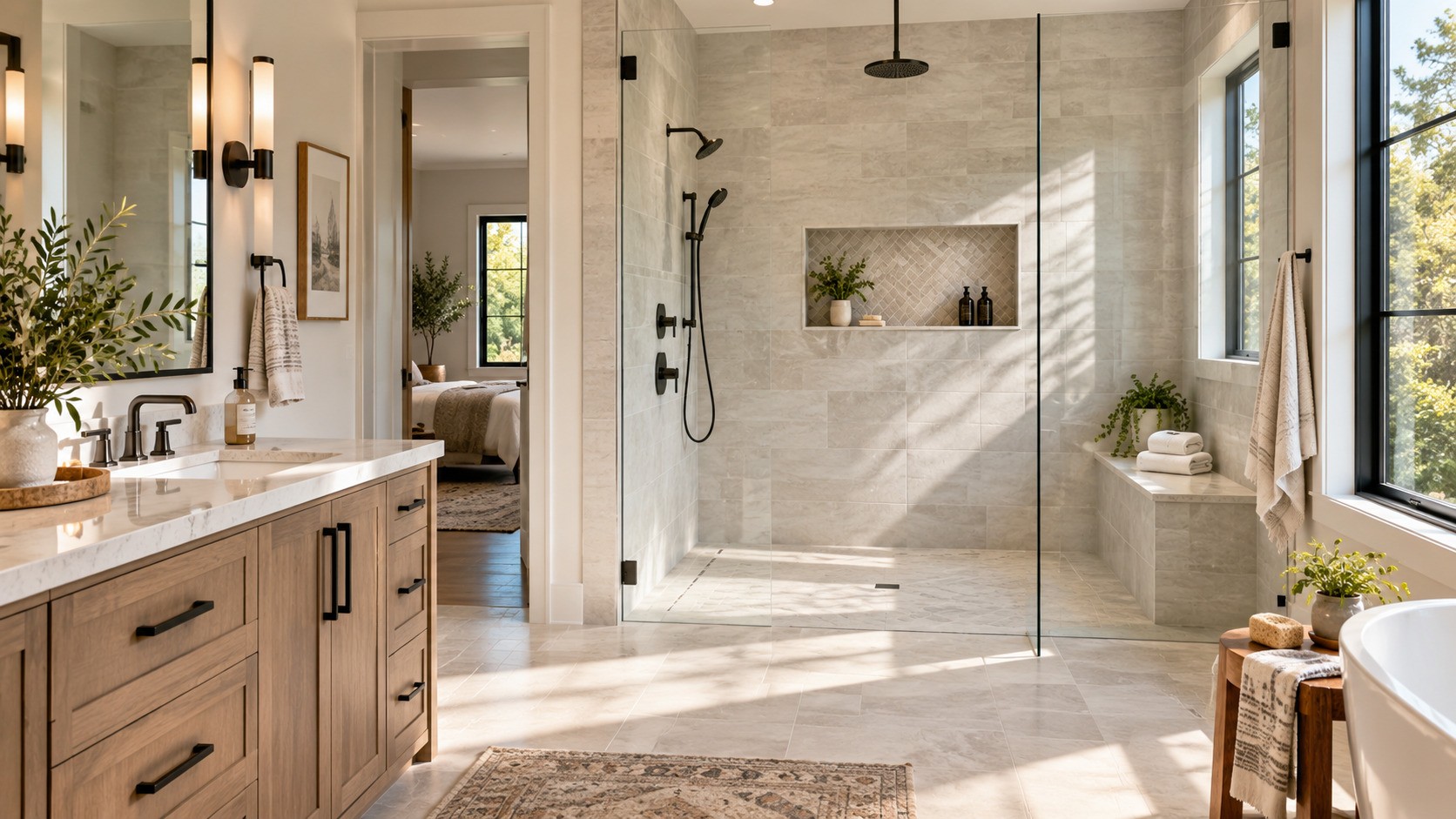
- Flexible layouts, including inline panels, corner units, neo-angle designs, and walk-in panels with no door.
- Clear views of tile, niches, and fixtures that homeowners often spend significant money on.
Tradeoffs to Consider
Cost is the main drawback. Frameless enclosures are usually the most expensive of the three options because of the thicker glass, heavier hardware, and precise installation required.
Water control also works differently. Frameless doors need small gaps at the hinge side and edges so the door can swing freely. Clear vinyl seals and door sweeps reduce leaks, but a frameless enclosure is not completely watertight. Proper shower head placement and a well-sloped floor matter more with this style.
Wall structure deserves attention as well. Heavy glass and hinges need solid support behind the tile. In a full remodel, installers often recommend adding wood blocking in the walls before the tile goes up.
Semi-Frameless Shower Glass
These enclosures sit between fully framed doors and frameless glass. They typically use metal framing around the fixed panels or along the walls, while the door itself has little or no frame. The look is cleaner than a traditional framed door, with more support than a frameless design.
Glass in semi-frameless enclosures is usually thinner, commonly 1/4 inch. The metal framing carries part of the load, so the glass does not need to be as heavy. Many semi-frameless styles are sliding or bypass doors, which work well where there is not enough room for a swinging door.
Benefits of Semi-Frameless Glass
- Lower cost than frameless glass in most cases.
- Better water containment, since the framing helps seal edges and corners.
- A more modern look than older fully framed enclosures.
- Good compatibility with standard tubs and smaller showers.
Tradeoffs to Consider
The metal framing and tracks add places for water spots, soap scum, and mildew to build up. Bottom tracks on sliding doors in particular need regular cleaning.
Visual impact is another factor. Semi-frameless glass looks cleaner than a framed door, but the metal still breaks up the view. In a bathroom with standout tile, some homeowners find that the framing distracts from the design.
Thinner glass can also feel less substantial. That difference is mostly about appearance and feel, since tempered glass in either thickness must meet the same safety standards.
Shower Curtains: A Simple, Budget-Friendly Enclosure Option
A shower curtain remains the simplest and least expensive way to enclose a shower or tub. It requires no glass fabrication, no wait for custom measurements, and very little installation. Replacing a curtain to update a bathroom’s look takes minutes.
Curtains work best in a few specific situations:
- Budget-focused updates, rental properties, and secondary bathrooms.
- Tub and shower combinations where children or pets are bathed and easy access matters.
- Accessible bathrooms, including roll-in showers, where a curtain allows a caregiver or wheelchair user to move freely.
- Homes where the owners plan a larger remodel later and want a temporary solution.
Tradeoffs to Consider
Water containment is the biggest weakness. Curtains can blow inward, leave gaps at the ends, and let water reach the floor. A weighted hem and a liner help, but they do not fully solve the problem.
Curtains and liners also need regular washing or replacement because mildew grows easily on them. Fabric curtains can usually go in the washing machine. Vinyl liners are often replaced instead.
Appearance is the final consideration. A curtain blocks the view of the shower and can make a small bathroom feel more closed in. For homeowners who just invested in new tile, a curtain may hide much of that work.
Hardware choice makes a difference. A curved rod adds elbow room in a standard tub. Fixed rods mounted with screws hold up better over time than spring tension rods, which can slip when a wet curtain gets heavy.
Side-by-Side Comparison
The table below summarizes how the three options generally compare. Actual results depend on the layout, product quality, and installation.
| Feature | Frameless | Semi-Frameless | Curtain |
|---|---|---|---|
| Relative cost | Highest | Moderate | Lowest |
| Typical glass thickness | 3/8 or 1/2 inch | Often 1/4 inch | Not applicable |
| Look | Open and minimal | Clean with some metal | Soft, blocks the view |
| Water containment | Good with seals and proper design | Very good | Fair |
| Cleaning effort | Low to moderate | Moderate, tracks need attention | Frequent washing or replacement |
| Installation | Custom measured, professional install | Often custom, professional install | Simple |
| Wall support needs | Solid backing recommended | Moderate | Minimal |
Glass Types, Coatings, and Hardware
Once you choose a style, several other decisions shape how the finished enclosure looks and performs.
Clear glass. Standard clear glass is the most common choice. It has a slight green tint that is most visible along the edges of thicker panels.
Low-iron glass. This glass is made with less iron, which reduces that green tint. It looks noticeably clearer, especially at 3/8 or 1/2 inch thickness. Expect to pay more for it.
Frosted, patterned, and tinted glass. These options add privacy and hide water spots better than clear glass. They work well in shared bathrooms or where the shower faces a door or window.
Protective coatings. Many glass suppliers offer coatings that help water bead and run off the surface. These treatments can make daily cleaning easier and reduce mineral spotting. Some are applied at the factory, while others are applied after installation and need periodic reapplication.
Hardware finishes. Hinges, handles, and clamps come in finishes such as polished chrome, brushed nickel, matte black, and brushed or polished brass. Matching the shower hardware to the faucet and fixtures creates a more consistent look. Quality matters here, since hinges carry the weight of the door every time it opens.
Layout Factors to Consider
The shape and use of your shower can narrow your options quickly.
Tub and shower combinations. Sliding doors, single fixed panels, and curtains are the most common choices over a tub. A fixed panel leaves part of the tub open, which makes bathing children easier but allows more splashing.
Walk-in showers. Larger showers can use a fixed panel with no door at all. This design works best when the shower is deep enough and the shower head is placed so that water sprays away from the opening.
Curbless showers. These showers rely on careful floor slope and drainage. Glass can still be used, but the installer must plan for how water will be contained without a raised curb.
Steam showers. A steam shower needs a fully enclosed space, often with glass that reaches the ceiling or a transom panel above the door. Standard frameless gaps would let steam escape, so steam enclosures require a specific design. Talk with your contractor early if you are considering one.
Door swing and clearance. Swinging doors need room to open fully without hitting a vanity, toilet, or towel bar. When space is tight, a sliding door or a fixed panel may be the better fit.
Measuring at the right time. Custom glass is measured after the tile and stone work is complete. Tempered glass cannot be cut once it has been tempered, so accurate measurements are essential. Expect a wait between measurement and installation while the glass is fabricated.
Cleaning and Long-Term Care
Every shower enclosure needs some maintenance. A few simple habits go a long way.
Use a squeegee or microfiber towel on glass after each shower. Removing water before it dries prevents most spotting and soap film. Ventilation also helps, so run the bathroom fan during and after showers.
Choose cleaners carefully. Mild, non-abrasive products are safest for glass, coatings, and hardware finishes. Abrasive pads and harsh chemicals can scratch glass or damage metal finishes over time.
Check seals and sweeps once or twice a year. These vinyl parts wear out and are inexpensive to replace. Replacing them promptly helps keep water inside the shower.
Watch the hardware as well. If a door begins to sag, drag, or close unevenly, have it checked. Loose hinges and clamps are easier and cheaper to fix early.
Tempered glass is strong, but it is not unbreakable. Edge damage from a hard impact can weaken a panel. In rare cases, tempered glass can break without an obvious cause because of tiny impurities in the glass. A quality fabricator and careful installation reduce these risks.
Questions to Ask Before Hiring an Installer
The quality of the installation matters as much as the product. Before you sign a contract, ask the following:
- Does your company carry liability insurance and any licenses required for this work in my area?
- Will you measure the space yourself after the tile is finished?
- What glass thickness and type are included in the quote?
- Is the glass tempered and permanently marked as safety glazing?
- What brand and finish of hardware will you use?
- How will you handle water control, including seals and sweeps?
- Does my wall have enough support for the glass and hinges?
- Is a protective coating included, and how is it maintained?
- How long will fabrication and installation take?
- What warranty covers the glass, hardware, and labor?
Get written quotes that list the same specifications so you can compare them fairly. A lower price sometimes reflects thinner glass, lower-grade hardware, or fewer included services.
Reviews and past work also tell you a lot. Ask to see photos of completed projects similar to yours. Check whether the company responds well when customers report a problem.
Making the Final Decision
Frameless glass offers the most open, modern look and the easiest daily cleaning, but it costs the most and needs careful planning for water control. Semi-frameless glass balances cost, appearance, and containment, which makes it a strong choice for many tubs and standard showers. Curtains remain a practical, flexible option for tight budgets, accessible bathrooms, and short-term updates.
Start with how the shower will be used day to day. Then weigh your budget, layout, and design goals. A knowledgeable local installer can visit your home, review your space, and help you choose the option that fits both your bathroom and your lifestyle.