
Older homes across Georgia carry real charm. Craftsman bungalows in Atlanta’s intown neighborhoods, brick ranches in Macon, Victorian cottages in Savannah, and farmhouses in the rural counties all draw buyers who want character. That charm often comes with surprises once the walls open up. Contractors who work on these houses see the same problems again and again. Knowing what to expect helps you budget realistically and avoid mid-project shock.
This guide covers ten of the most common hidden issues found in older Georgia homes, along with the state rules and local conditions that shape how they get handled. Each section explains what the problem is, why it shows up here, and what a responsible fix looks like.
Why Georgia’s Older Homes Deserve Extra Attention
Climate does a lot of the damage. The state is humid for much of the year, and most of it sits in a mixed-humid climate zone. Wood stays damp longer. Metal rusts faster. Insects thrive.
Construction habits matter too. Homes built before the 1960s in Georgia were often placed on brick piers or vented crawlspaces rather than slabs or basements. Wall insulation was rare until later decades. Building codes were adopted and enforced unevenly across the state’s 159 counties for many years, so the quality of past work varies widely from one house to the next.
None of this makes older homes bad investments. It simply means that a thorough remodel almost always uncovers conditions the previous owner never knew about.
1. Outdated or Unsafe Electrical Systems
Electrical problems top the list for a reason. Wiring methods have changed dramatically over the past century, and each era left its own issues behind.
Knob-and-tube wiring shows up in homes built before roughly 1950. It has no ground conductor. The insulation on the wires becomes brittle with age. Many insurers will not write a policy on a house with active knob-and-tube circuits. Burying this wiring in modern insulation traps heat and creates a fire risk, which is why it usually has to go during an energy retrofit.
Aluminum branch circuit wiring appeared in homes built between about 1965 and 1973, when copper prices spiked. This metal expands and contracts more than copper. Connections loosen over time, which creates heat at outlets and switches. The U.S. Consumer Product Safety Commission has warned about fire hazards associated with this wiring for decades. Repair options include full replacement or approved connectors that join copper pigtails to the existing aluminum.
Ungrounded two-prong outlets, undersized service panels, and cloth-covered wiring round out the usual findings. Some older panels, including certain Federal Pacific Electric Stab-Lok models, have a documented history of breakers failing to trip. A 60-amp or 100-amp service may have been fine for a house with a few lamps and a refrigerator, but it will not support a modern kitchen, central air, and an electric vehicle charger.
Georgia adopts the National Electrical Code as part of its State Minimum Standard Codes, administered by the Georgia Department of Community Affairs. Any new circuits or panel work during a remodel must meet the current adopted edition. A remodel that opens walls is often the most cost-effective time to rewire, since the drywall is already coming down.
Lead Paint Hazards in Older Georgia Homes
The federal government banned lead-based paint for residential use in 1978. Any Georgia home built before that year may contain it. Layers of old paint hide under newer coats on trim, windows, doors, and porches. Lead dust becomes a hazard when sanding, scraping, or demolition disturbs those layers.
Contractors cannot simply ignore this. The EPA’s Renovation, Repair, and Painting Rule requires firms working on pre-1978 housing to be certified and to follow lead-safe work practices. This rule applies when a job disturbs more than six square feet of painted surface per interior room or more than twenty square feet on the exterior.
In Georgia, the Environmental Protection Division administers the lead-based paint renovation program. Firms must hold state certification, and individual renovators must complete an accredited training course. Homeowners should ask for proof of certification before signing a contract.
Testing is straightforward. A certified lead inspector or risk assessor can test painted surfaces with an X-ray fluorescence analyzer. Window sashes and friction surfaces deserve close attention, because that is where paint wears down into dust. Soil near the foundation of an older home can also carry lead from decades of exterior paint weathering off the siding.
Lead-safe practices add cost. Containment, HEPA vacuuming, and proper cleanup take time. Skipping these steps to save money puts children and workers at risk, and it can bring fines. The extra expense is modest compared to the medical and legal consequences of doing it wrong.
3. Asbestos in Building Materials
Asbestos was used in thousands of building products through the 1970s and into the 1980s. Older Georgia homes commonly contain it in nine-inch floor tiles, the black mastic beneath them, textured ceilings, pipe insulation, duct wrap, cement siding, and roofing felt. Vermiculite attic insulation from the Libby, Montana mine is another well-known source.
Intact asbestos is generally not dangerous. The problem starts when demolition breaks it apart and fibers become airborne. A contractor cannot tell by looking. Laboratory testing of a sample is the only way to know for certain.
Georgia’s Environmental Protection Division also runs the state asbestos program. Abatement contractors must be licensed by the state. While single-family homes are exempt from some federal notification rules that apply to commercial buildings, a reputable contractor will still stop work and call for testing when a suspect material turns up.
Plan for it. Budget a line item for sampling on any home built before the mid-1980s. Positive results may mean professional removal before the rest of the work can proceed. Sometimes the better answer is to leave the material in place and cover it, such as installing new flooring over old tile instead of ripping it out. A knowledgeable contractor will walk you through both options.

4. Failing Plumbing
Pipes hide inside walls, under slabs, and beneath crawlspaces. Their condition often stays unknown until a remodel exposes them.
Galvanized steel supply lines were standard for much of the twentieth century. They corrode from the inside. Rust narrows the pipe and reduces water pressure. Leaks follow, usually at threaded joints. Many contractors recommend replacing all galvanized supply lines rather than splicing new material into old, because the remaining sections will keep failing one at a time.
Polybutylene is a different concern. This gray plastic pipe was installed in enormous numbers between about 1978 and 1995. It was popular across the Southeast because it was cheap and easy to work with. Chlorine in municipal water attacks the material, and the fittings fail without warning. A class action settlement in the 1990s covered many failures, but that settlement has long since closed. Homes with polybutylene often face insurance difficulties as well.
Cast iron drain lines are the third common finding. These pipes last a long time, but the bottom of a horizontal run eventually rots out. Sewer gas smell, slow drains, and damp soil in the crawlspace are the warning signs. A camera inspection of the main line costs relatively little and can save a great deal of grief.
Georgia’s plumbing code is part of the same state minimum standard codes. Replacement work needs a permit in most jurisdictions, and licensed plumbers are required for most of it. Older homes in rural parts of the state may also rely on septic systems and private wells, which bring their own inspection and permitting rules through county health departments.
5. Termite Damage and Other Wood-Destroying Organisms
Georgia sits in one of the heaviest termite pressure zones in the country. Eastern subterranean termites are active statewide. Formosan termites, which form larger colonies and do damage faster, have been found in parts of the state, including the coast.
Contractors regularly open a wall and find sills, studs, or floor joists eaten hollow. The exterior may look fine. Termites work from the inside, leaving a thin shell of paint or wood intact. Mud tubes on foundation walls are one clue. Soft spots near a bathroom or a leaking hose bib are another.
Older homes are especially vulnerable. Wood that touches soil, untreated sill plates, and decades of moisture create ideal conditions. Many older houses have gone years without a maintained termite treatment, and any barrier that once existed has long since broken down.
The Georgia Department of Agriculture regulates pest control through the Structural Pest Control Act. Licensed companies issue the Official Georgia Wood Infestation Report, commonly called a termite letter. Real estate transactions in the state typically involve this report, although it only reflects visible evidence at the time of inspection. Damage behind finished walls does not show up.
Repairs involve sistering or replacing damaged framing and eliminating the moisture source. Treatment by a licensed company should follow. Powder post beetles and wood-decay fungi also turn up in older Georgia houses and require similar attention. A contractor should photograph and document all damage before covering it, since this record supports insurance claims and future resale disclosures.
6. Moisture, Foundation, and Crawlspace Problems
Summers in Georgia are long and wet. Many older homes sit on vented crawlspaces or brick piers, a design that lets humid outdoor air flow underneath the house.
That air condenses on cool ductwork and floor framing. Over the years, the result is wood rot, mold growth, rusted ductwork, and sagging floors. Contractors frequently find insulation hanging in wet clumps from the floor joists. Musty odors inside the house are usually the first thing a homeowner notices.
Foundations present their own issues. The red clay common across the Piedmont region holds water and shifts with wet and dry cycles. Brick piers settle unevenly. Old foundations of stacked stone or unreinforced block develop cracks. Floors that slope toward the center of the house often trace back to undersized girders or rotted piers below.
Drainage is usually part of the story. Downspouts that dump water at the foundation, negative grading, and clogged or missing French drains all push water toward the crawlspace. Fixing the source matters more than patching the symptom.
Solutions range in cost. Grading and gutter work are cheap. Crawlspace encapsulation with a vapor barrier and dehumidifier is more involved. Structural repair with new piers or steel supports is the most expensive tier. A structural engineer’s evaluation is worth the fee when floors are out of level by more than a small amount or when cracks are wide and active.
7. Unpermitted and Substandard Prior Work
Every older house has been touched by previous owners. Some of that work was done well. The rest was not.
Contractors find load-bearing walls removed without a proper header. They find joists notched deeply to run a drain line. Wiring spliced outside a junction box, dryer vents ending inside the attic, and bathroom fans blowing into the ceiling cavity are all common. Additions built on inadequate footings show up often. Decks attached with nails instead of lag bolts or through-bolts are a safety problem in themselves.
Georgia’s state minimum codes apply statewide, but enforcement happens at the city or county level. Some rural counties have limited or no inspection programs. Homes in those areas may have gone through several renovations without any outside review.
Unpermitted work creates practical trouble. Once you pull a permit for a new remodel, the inspector may require earlier deficiencies to be corrected. Disclosure obligations at resale can also come into play. Correcting bad work is almost always cheaper during a remodel than after the finishes go back on.
Georgia requires a state license for residential contractors on projects where the total value exceeds $2,500. Make sure to always hire a licensed Georgia contractor.
8. Historic District Restrictions
Many of Georgia’s older homes sit inside locally designated historic districts. Savannah, Athens, Macon, Augusta, and several Atlanta neighborhoods have active preservation commissions. Exterior changes in these districts often require a certificate of appropriateness before a building permit is issued. Windows, siding, porches, and rooflines get the most scrutiny. Interior work is usually not regulated by local historic ordinances.
Check with the local planning office early. Learning about a review requirement after materials are ordered is an expensive mistake. The state’s Historic Preservation Division, housed within the Department of Community Affairs, can point you toward local contacts and information on rehabilitation incentives.
9. Missing Insulation, Aging HVAC, and Leaky Ductwork
Homes built in Georgia before the 1970s often have little or no insulation in the walls. Attics may hold a thin layer of blown material that settled decades ago. Floors over crawlspaces are frequently bare. Energy bills in these houses run high in both July and January.
Contractors opening walls sometimes find newspaper, old rags, or nothing at all in the stud bays. Adding insulation during a remodel is easy when the cavities are exposed. Knob-and-tube wiring must be dealt with first, since it cannot be safely buried in insulation.
Heating and cooling equipment is another sore spot. Many older homes were retrofitted with central air long after they were built, and the ductwork was squeezed into whatever space was available. Ducts run through hot attics and damp crawlspaces. Joints were often sealed with cloth tape that has since failed, so a good portion of the conditioned air never reaches the rooms. Undersized returns, rusted plenums, and equipment well past its expected service life are all typical findings.
Georgia’s energy code, part of the state minimum standard codes, sets insulation and duct sealing requirements for new work. Bringing an older house closer to those standards during a remodel improves comfort and lowers monthly costs. A blower door test and a duct leakage test give hard numbers before and after the work.
10. Roof, Chimney, and Attic Problems
The roof rarely gets a close look until a leak appears. Older Georgia homes often carry two or three layers of shingles stacked on top of each other. Extra layers add weight and hide rotted decking underneath. Flashing around chimneys, valleys, and plumbing vents is the usual failure point.
Chimneys deserve special attention. Masonry chimneys in older homes may have no flue liner, or a clay liner that has cracked. Mortar joints deteriorate from freeze and thaw cycles in north Georgia and from constant moisture everywhere else. A chimney built for a wood fireplace may later have been used to vent a gas furnace or water heater, which can lead to condensation damage and carbon monoxide risk if the flue is not properly sized and lined. An inspection by a certified chimney professional is a reasonable step before a remodel touches that part of the house.
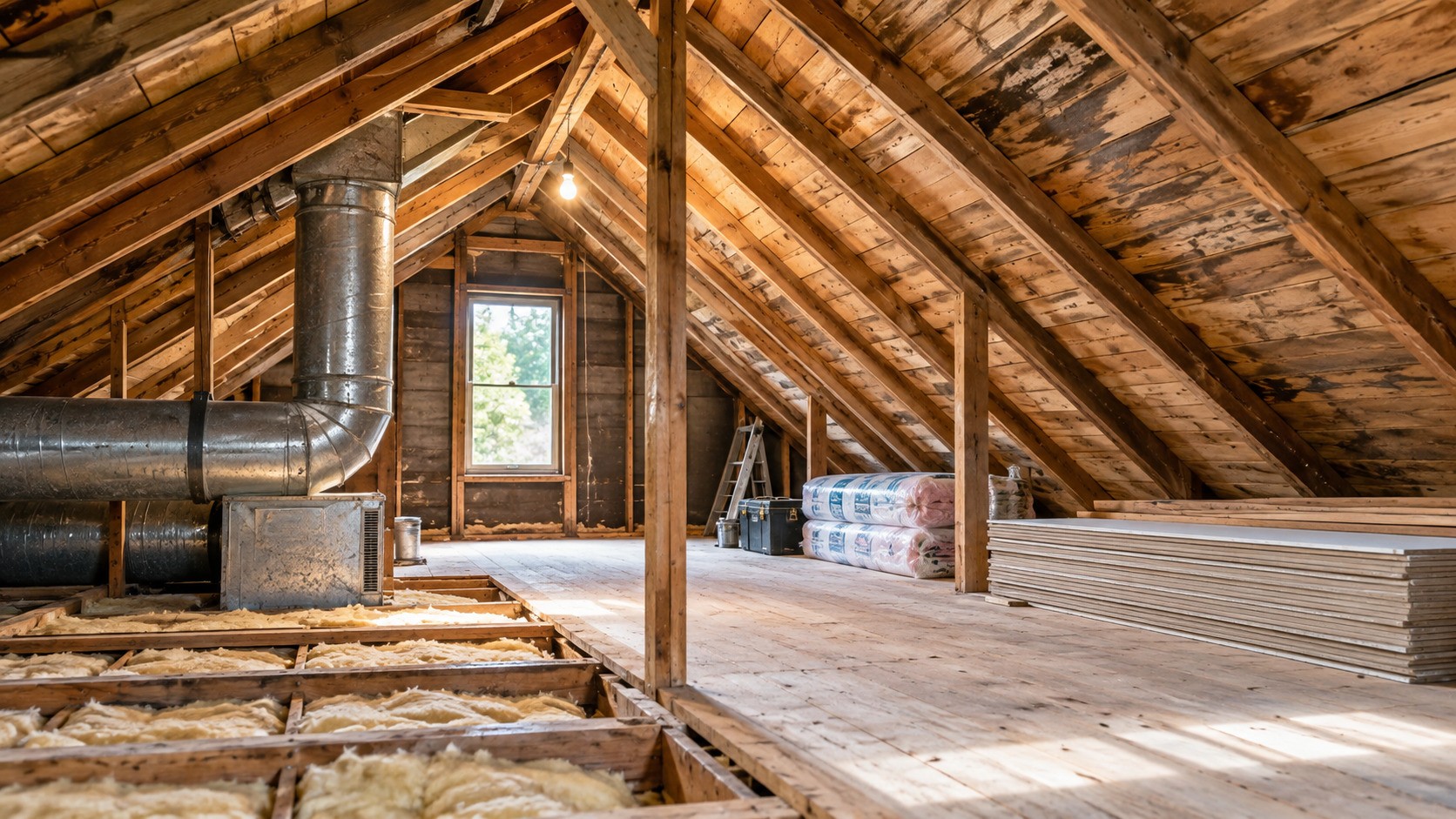
Attics hide their own problems. Contractors find inadequate ventilation, bathroom fans dumping moist air into the space, old vermiculite insulation, rodent damage, and roof framing that was cut to make room for a previous addition. Ridge sag and cracked rafters point to overloading or undersized lumber. Those items need a structural fix before new roofing goes on.
How to Protect Yourself Before the Work Starts
Get a thorough pre-renovation inspection. A standard home inspection is a starting point, but it is limited to what can be seen without opening anything. Consider adding the following:
- Lead paint testing for any home built before 1978
- Asbestos sampling of suspect materials
- A sewer camera inspection of the main drain line
- A termite inspection with a written report
- A structural engineer’s review if floors are uneven or cracks are present
- An electrical evaluation by a licensed electrician
- A crawlspace moisture and mold assessment
- A roof and chimney inspection
- A blower door or duct leakage test if energy costs are a concern
Build a contingency into the budget. A reserve of 10 to 20 percent above the contract price is a common recommendation for older homes, because surprises are the norm rather than the exception. Spending that reserve on necessary repairs is far better than stopping a project halfway through.
Write a clear contract. Specify how change orders are handled when hidden conditions appear. Define who pays for testing and abatement. Ask how the contractor documents conditions found behind walls, since photos are useful for insurance and resale.
Experience matters. Remodeling a 1920s bungalow is different from building a new subdivision home. A contractor who works on older houses regularly will anticipate problems instead of reacting to them. Request references from similar projects and ask those homeowners what surprised them.
Confirm insurance. General liability and workers’ compensation coverage protect you if something goes wrong on site. Request certificates directly from the insurer rather than accepting a photocopy.
The Payoff
None of this should scare anyone away from an older Georgia home. These houses were often built with old-growth lumber, thick plaster, and craftsmanship that is hard to find today. The hidden problems are real, but they are also predictable. With the right testing, a realistic budget, and a licensed contractor who knows the territory, a remodel can address decades of deferred issues in a single project and leave the house safer and more comfortable than it has been in generations.